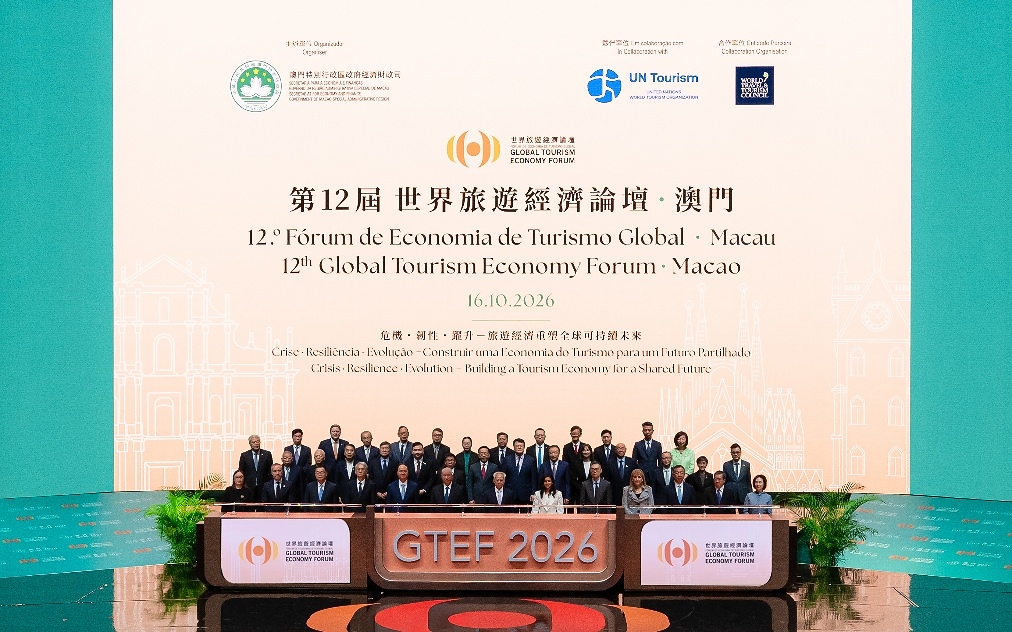
The Global Tourism Economy Forum returned to Macao on October 17, 2026, opening its 12th edition at the MGM Theater at MGM COTAI under the theme "Crisis, Resilience, Evolution — Building a Tourism Economy for a Shared Future." The event drew government ministers, hospitality executives, academics, and international organization representatives to debate how the sector can convert ongoing disruption into durable growth — a question with direct implications for operators across hospitality, foodservice, and destination dining.
The Numbers
UN Tourism Secretary-General Shaikha AL NUWAIS framed the stakes plainly in her opening remarks: 690 million people have traveled internationally so far this year, 3 million more than during the same period in 2026's prior-year comparable — and that figure arrived against a backdrop of ongoing geopolitical tension and Middle East conflict. "Success is not only about how many people travel," she said. "It's about what their journeys create for destinations and for communities." She specifically highlighted Macao's pivot "from volume to value, connecting culture, gastronomy, health and innovation," signaling that food-and-beverage experience remains central to the destination's competitive positioning.
Why It Matters for Operators
For hospitality and foodservice professionals, the Forum's thematic focus on workforce skills, cultural integration, and green transition carries concrete operational weight. Gloria GUEVARA, President & CEO of the World Travel & Tourism Council (WTTC) and Honorary Chairman of GTEF, pointed to China's visa-exemption policies and improved air connectivity as key drivers unlocking inbound volume — trends that ripple through hotel food-and-beverage programs, banqueting pipelines, and beverage tourism strategies across the Asia-Pacific region. LUO Laijun, Vice Chairman of the All-China Federation of Industry and Commerce, noted that the industry's structural transformation has been accelerated by converging pressures: public health emergencies, extreme weather, economic volatility, and shifting consumer preferences. "By focusing on emerging consumer trends and driving breakthroughs in cultural integration, green transition, and smart travel, the industry can turn crises into catalysts for evolution," he said.
What's Next
The forum's partner country framing added a cross-border trade dimension. Spain's Representative of the Minister for Industry and Tourism, Miguel SANZ CASTEDO — who also serves as President of the European Travel Commission — called out shared challenges around technology adoption, human-centered service, and equitable prosperity, positioning public-private dialogue as the mechanism for progress. Hainan Province, featured as the event's prominent Chinese regional showcase, used the platform to pitch collaboration opportunities within its free trade port framework. Forum Chairman HO Hau Wah underscored the event's growing geographic ambition, noting that last year's 11th edition ventured to Harbin for the first time — a sign that the Forum's influence is extending well beyond its Macao roots. Since its 2012 founding, GTEF has attracted more than 15,500 delegates from 88 countries and regions, and featured over 780 speakers, making it one of the more consequential annual convenings for the international hospitality economy. For operators tracking inbound tourism pipelines, destination development policy, and cross-border travel demand, its proceedings are worth monitoring closely.
Written by Michael Politz, Author of Guide to Restaurant Success: The Proven Process for Starting Any Restaurant Business From Scratch to Success (ISBN: 978-1-119-66896-1), Founder of Food & Beverage Magazine, the leading online magazine and resource in the industry. Designer of the Bluetooth logo and recognized in Entrepreneur Magazine's "Top 40 Under 40" for founding American Wholesale Floral, Politz is also the Co-founder of the Proof Awards and the CPG Awards and a partner in numerous consumer brands across the food and beverage sector.