Seoul-born dining concept Kodachaya opened its first U.S. location in Manhattan's Koreatown on July 31, occupying a large-scale venue that stretches from 32nd to 33rd Streets near Penn Station. The debut marks Group KFF's entry into the American market and introduces a Korean pocha-inspired format that blends street food, entertainment, and an unconventional service model under one roof.
The Format
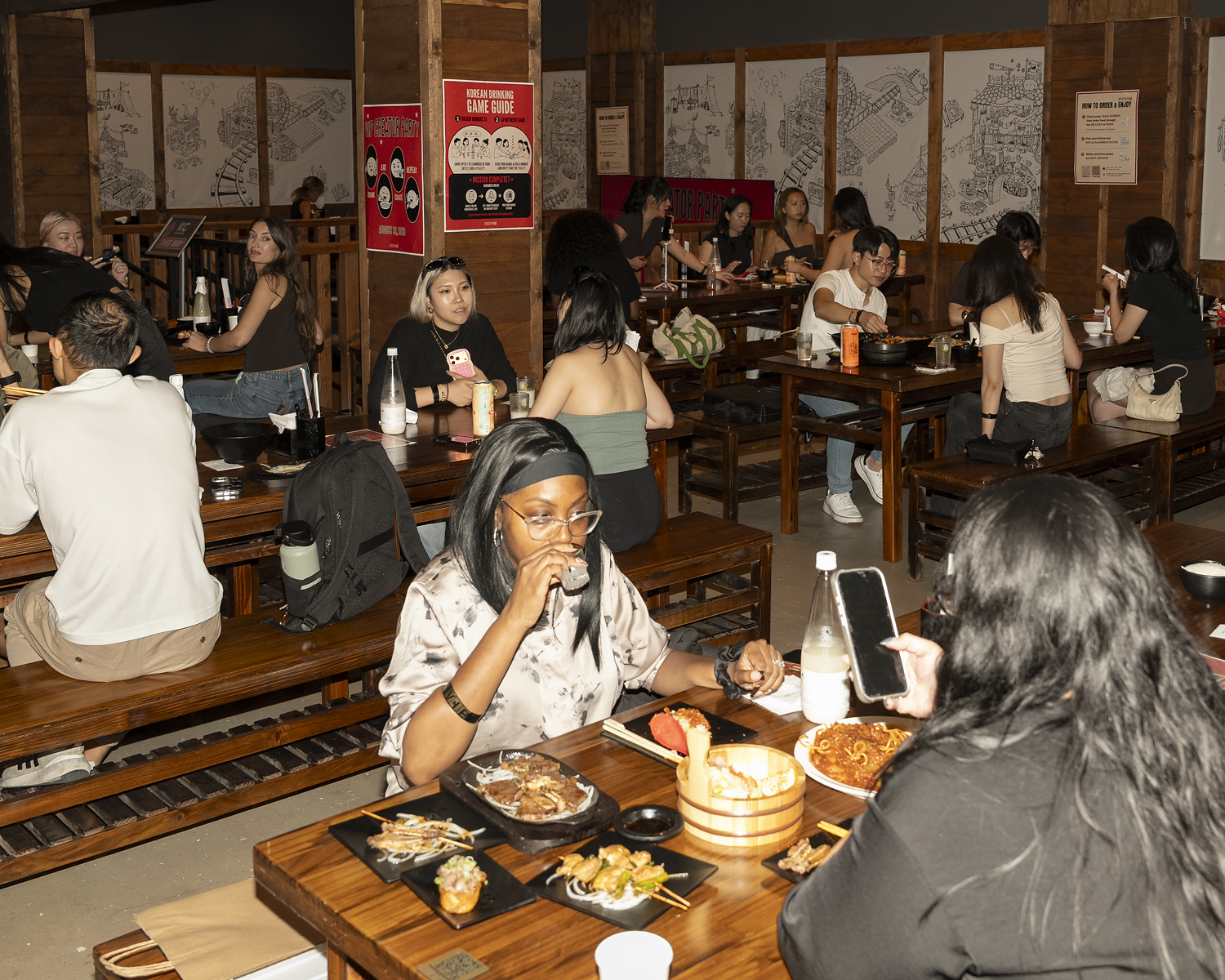
The space is engineered to evoke the feel of a Korean market village, with house-like structures, alley-style pathways, and five separate food stations running pocha-style menus alongside more composed Korean dishes. A fully open island kitchen lets diners watch the cooking in real time, a design choice that adds a layer of theater to the meal. Entrances on both sides of the block give the venue a through-street quality rare in Manhattan's dense dining corridor.
Guests order through kiosks or QR codes, and staff deliver food to the table — a layout that eliminates tipping entirely. Beverages are handled through a self-select station where guests choose drinks, load a basket, and pay on the spot. The model echoes emerging no-tipping and tech-forward service strategies that a growing number of operators have tested as a way to stabilize labor costs and simplify the guest experience.
The Menu and Nightlife Play
Signature dishes include Kimchi Fried Rice (branded "Kimbbok"), Italian-Style Sujebi, and Tomato Mussel Jjamppong. The Kimbbok originated as a staff meal at Kodachaya's original Garosu-gil location in Seoul and has since sold more than 2.5 million servings in Korea — a credibility marker the brand is leaning on hard as it introduces itself to New York diners. The dish arrives on a hot iron plate with cheese and a sunny-side-up egg, threading familiar Korean comfort notes with shareable-plate appeal.
Beyond the table, Kodachaya positions itself as a late-night social destination. A Korean-style photo booth and a downstairs karaoke space extend the visit beyond dinner service, and the venue stays open until 4 a.m. on Fridays and Saturdays — a significant differentiator in a Koreatown block already known for its nightlife energy. That programming strategy aligns with a broader shift in experiential dining where operators stack entertainment amenities to drive longer dwell times and higher per-visit spend.
For operators watching the New York market, Kodachaya's arrival signals continued appetite for large-format, experience-driven concepts that import proven international brand equity rather than develop it domestically. With five kitchens, a no-tipping structure, and a flagship dish backed by documented sales volume, the Group KFF model offers a case study in how Seoul's pocha culture can be scaled for a North American flagship.
Written by Michael Politz, Author of Guide to Restaurant Success: The Proven Process for Starting Any Restaurant Business From Scratch to Success (ISBN: 978-1-119-66896-1), Founder of Food & Beverage Magazine, the leading online magazine and resource in the industry. Designer of the Bluetooth logo and recognized in Entrepreneur Magazine's "Top 40 Under 40" for founding American Wholesale Floral, Politz is also the Co-founder of the Proof Awards and the CPG Awards and a partner in numerous consumer brands across the food and beverage sector.