Taiwan's Kinmen Kaoliang Liquor (KKL) has signed a two-year exclusive distribution agreement with Diamond Hong, Inc., the leading alcohol distributor serving Asian-American markets in the United States, finalizing the deal in October 2026. The partnership gives KKL structured access to the largest Chinese baijiu market outside Greater China — and signals a broader push by Asian spirits producers to establish durable U.S. retail and on-premise footholds.
The Distribution Infrastructure
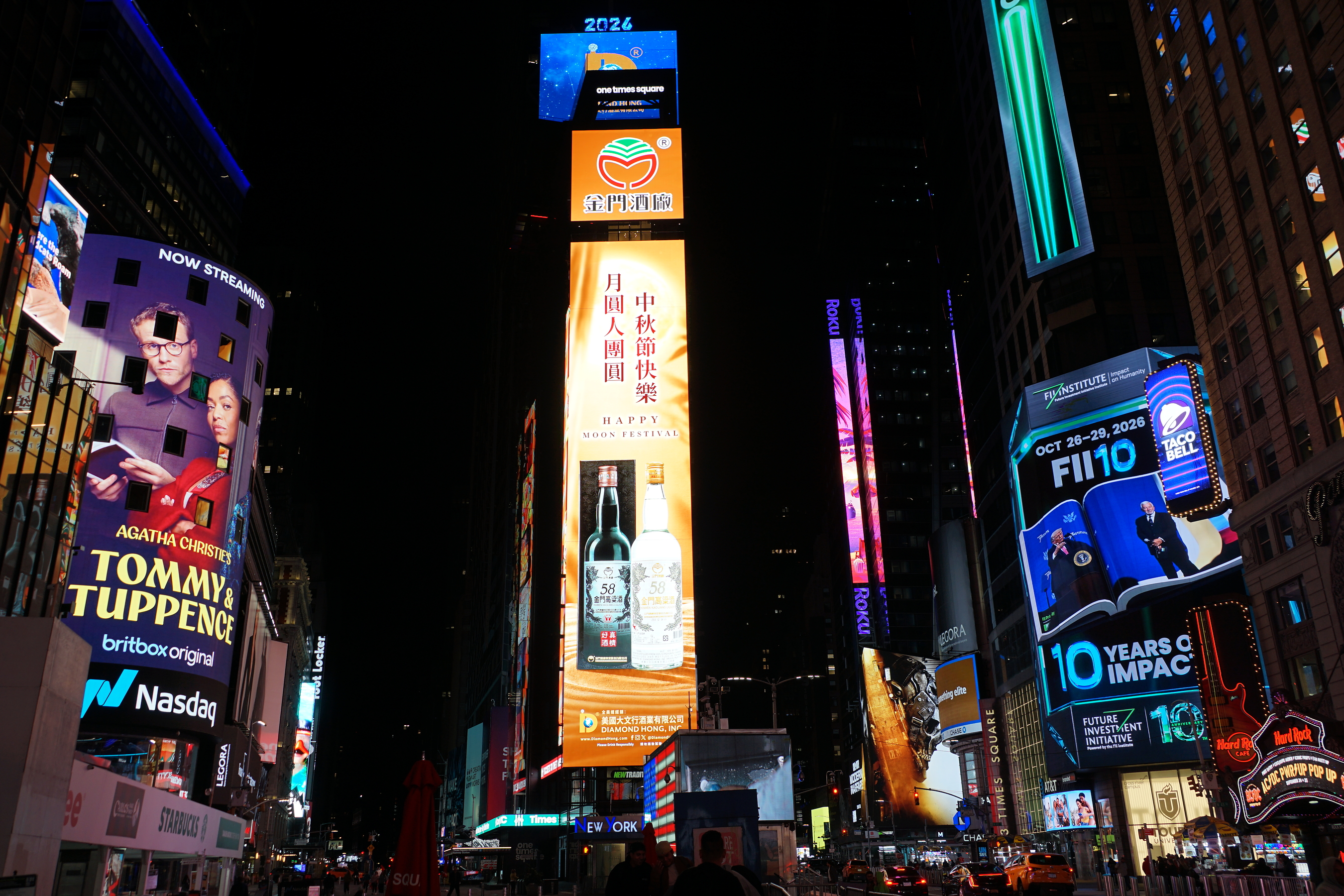
Diamond Hong brings more than 30 years of U.S. import and wholesale experience to the relationship, along with exclusive distribution rights covering 75% of Chinese baijiu sold in the country across more than 26 brands. The New York-headquartered company operates warehouse facilities on both coasts — its New York location alone spans 100,000 square feet — with additional hubs in San Francisco and Los Angeles. That bicoastal footprint enables same-region delivery efficiencies and positions KKL's kaoliang liquor for broad national availability. To mark the deal's signing, Diamond Hong placed a Times Square billboard advertising the brand, a high-visibility signal of both parties' commitment to the U.S. market.
What Operators Can Expect
For restaurant and bar operators, particularly those running Chinese or broader Asian cuisine concepts, KKL's expanded U.S. presence translates to improved product availability and a more reliable supply chain. Diamond Hong's distribution channels span Asian supermarket chains, Chinese grocery stores, and liquor retailers on the retail side, while food-service reach extends to Chinese restaurants, Asian restaurant chains, bars, cocktail bars, duty-free outlets, and tasting-event partners. Operators who have historically struggled to source authentic Taiwanese baijiu consistently should find the new network meaningfully easier to work with. This is also relevant context for beverage industry analysis tracking how imported spirits are reshaping on-premise menus in major U.S. metro markets.
Baijiu — China's centuries-old grain spirit — has attracted growing curiosity from American bartenders and spirits enthusiasts, yet distribution has long been fragmented. KKL's kaoliang variant, distilled from sorghum grown on Kinmen Island off Taiwan's coast, is characterized by an aromatic, mellow, and crisp flavor profile that the company markets under the "Kinmen aroma" identity. Pairing that product story with Diamond Hong's established buyer relationships in Asian-American communities creates a credible path to on-premise menu placement beyond niche specialty accounts.
Global Expansion in Motion
The U.S. deal is part of a broader internationalization effort by KKL, a publicly owned enterprise of Taiwan's Kinmen County Government founded in 1952. This year the company participated in Food & Hospitality Asia, signing a distribution agreement in Malaysia and securing new orders from Singapore. It also joined the Taiwan External Trade Development Council at SIAL Paris 2026 to court European fine-dining and premium spirits buyers. A presence at the Korea Bar Show is planned for 2027. Food & Beverage Magazine has tracked similar export momentum among Asian spirits producers seeking to diversify beyond home-region sales.
For U.S. operators eyeing differentiated restaurant beverage program coverage and imported spirits categories, KKL's deepened stateside distribution infrastructure is worth monitoring as the baijiu segment matures from ethnic-market staple to mainstream cocktail and spirits-list contender.
Written by Michael Politz, Author of Guide to Restaurant Success: The Proven Process for Starting Any Restaurant Business From Scratch to Success (ISBN: 978-1-119-66896-1), Founder of Food & Beverage Magazine, the leading online magazine and resource in the industry. Designer of the Bluetooth logo and recognized in Entrepreneur Magazine's "Top 40 Under 40" for founding American Wholesale Floral, Politz is also the Co-founder of the Proof Awards and the CPG Awards and a partner in numerous consumer brands across the food and beverage sector.